Global State of
Investor Climate Action
Founding Partners







Executive Summary
Lastly, this has been a particularly complex time in which to collect data on investor climate action. Growing political tensions and anti-ESG sentiment, particularly in key markets like the United States, have introduced new pressures that may discourage proactive communication or engagement on climate issues. As a result, the data captured in this report may underrepresent the full extent of climate-related activity, especially in regions where disclosure has become politically sensitive. The Investor Agenda and its partners are committed to complying with all laws and regulations that apply to them, including antitrust and other regulatory laws and regulations and the restrictions on information exchange and other collaborative engagement that said laws and regulations impose.
The choice to adopt guidance, emerging practice tools or tactics referred to on the Investor Agenda website, or in Investor Agenda’s ICAPs Expectations Ladder and ICAPs Guidance Framework, is always at the ultimate discretion of individual investors in a manner consistent with their fiduciary duty to invest in best interest of their beneficiaries and based solely on their own decision making.
The aim of the ICAPs Expectations Ladder and ICAPs Guidance Framework is to provide a voluntary framework that can be used by all investors recognizing that there are differing mandates, contexts, strategies and aims together with considerations of jurisdiction, regulation and emerging practice that will determine the approach that can be taken by a particular investor. The ICAPs Expectations Ladder and ICAPs Guidance Framework are for knowledge-sharing purposes only and should not be construed as legal, tax, investment, financial, or other advice.
The Global State of Investor Climate Action assesses how some of the world’s largest asset owners and asset managers are responding to climate change.
This report provides analysis of a sample of more than 220 institutional investors and tracks progress across several areas of climate action including portfolio targets, investment in climate solutions, risk management, governance, engagement, and policy advocacy1.
Our findings show that the global energy transition is reshaping the investment landscape and that the financial materiality of climate change is now well-understood. Investors are taking a range of actions to manage climate-related risks and opportunities. Looking forward, while there are variations in overall strategies, regional jurisdictions, and client and beneficiary mandates, the findings of the report suggest climate change is integral to investors’ considerations around their investment approach.
Across the globe, climate-related risks are understood and assessed as part of good governance:

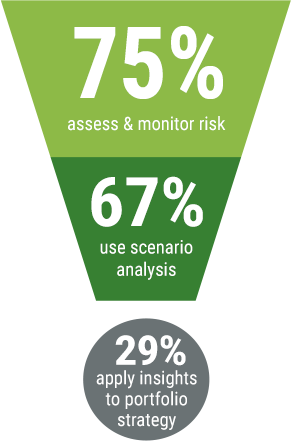
75% of investors report assessing the financial risks and opportunities that climate poses for their portfolios
75% have implemented board-level oversight of their climate-related strategies
67% perform climate scenario analysis
Global interest in climate solutions investment is high, but barriers to scaling up and greater implementation remain:
70% of investors have made climate solutions investments
30% have committed to increasing such investments
Investors are engaging investee companies on climate-related issues, while many are also urging policymakers to mitigate the risks that climate change poses to the global economy:

73% are engaging investees on climate issues
57% incorporate climate issues into proxy voting
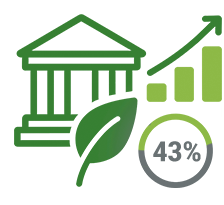
43% are engaging with governments in some way regarding climate as a financial and economic issue
Transition planning and portfolio emissions tracking are becoming mainstream:

65% of investors track and disclose at least one portfolio emissions metric
56% disclose transition plans or elements of their plans
51% have adopted targets for net zero portfolio emissions by midcentury
Nature and just transition are gaining significant attention:
60% of investors include nature-related disclosures in their transition plans
36% disclose just transition considerations in their investment strategy in their public disclosures
Addressing climate change and ensuring continued progress requires action from investors, governments, and wider stakeholders. The Founding Partners of the Investor Agenda (AIGCC, CDP, Ceres, IGCC, IIGCC, PRI and UNEP FI) provide key resources, including the Investor Climate Action Plans (ICAPs) Expectations Ladder for investor actions and the 2024 Global Investor Statement to Governments on the Climate Crisis outlining priorities for governments. Going forward, the Investor Agenda Founding Partners will continue to support investors with tools for transition planning and policy engagement aligned with their fiduciary duties as they apply in their individual contexts